 Drupal → Next.js · live in 48 hours
How Amity Executive Education was redesigned, rebuilt and live in 48 hours
Amity Executive Education offers leadership, AI, finance and entrepreneurship programmes for working professionals. During its rebrand from Executive Varsity, the Drupal site had to be replaced before a fixed launch date. Filari studied the old site and the client's layout, planned the work in parallel streams, and moved everything to Next.js and Strapi in 48 hours.
- Next.js
- Strapi CMS
- CRM API
- Payments
- GTM
A rebrand with the launch date days away
A rebrand from Executive Varsity, new programmes, and a Drupal site that could not change fast enough, with a launch date days away.
Redesign and rebuild on Next.js and Strapi
Filari styled the client's layout into a full design and rebuilt the site on Next.js and Strapi, with leads, payments and an admissions dashboard.
Designed in a day, live in 48 hours
The redesign was ready within a day and the complete platform was live within 48 hours.
Project snapshot
A rebrand, a Drupal to Next.js migration and a new admissions flow, delivered together
- Client
- Amity Executive Education (formerly Executive Varsity)
- Industry
- Education > Executive Education
- Project type
- Redesign and Drupal to Next.js migration
- Filari's role
- Design, build, content migration, CRM leads, payments, admissions dashboard
- Technology
- Next.js, Strapi, CRM API, payment gateway, Google Tag Manager
- Timeline
- 48 hours, brief to live
A new brand, a Drupal site and a launch that could not wait
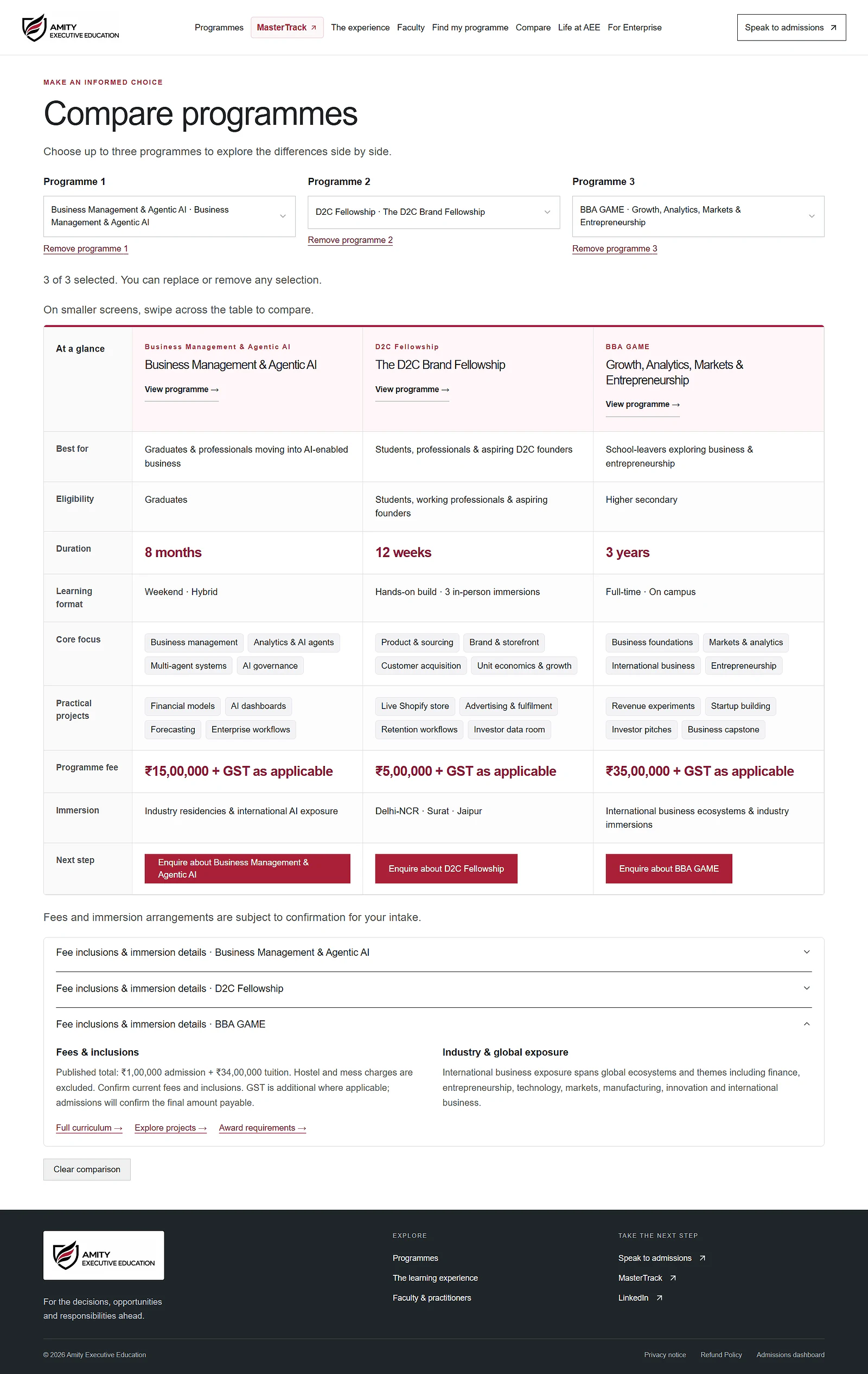
In education, a rebrand rarely waits for the website. Amity was renaming Executive Varsity to Amity Executive Education and adding programmes in leadership, AI, finance and entrepreneurship. The earlier site ran on Drupal. The client shared the layout they wanted and needed the new site live urgently, so Filari's team took on the whole job at once: design, front end, CMS, content migration, leads and payments.
- Dark theme, heavy imagery, long scrolling pages
- Programme updates needed a developer
- Visitors browsed lists to find a fit
- No side-by-side comparison
- Enquiries handled outside one system
- Light, editorial design styled from the client's layout
- Programmes, faculty and events managed in Strapi
- Four questions give a shortlist with reasons
- Up to three programmes compared side by side
- Every enquiry sent to the CRM with consent
A new face, and a new engine underneath.
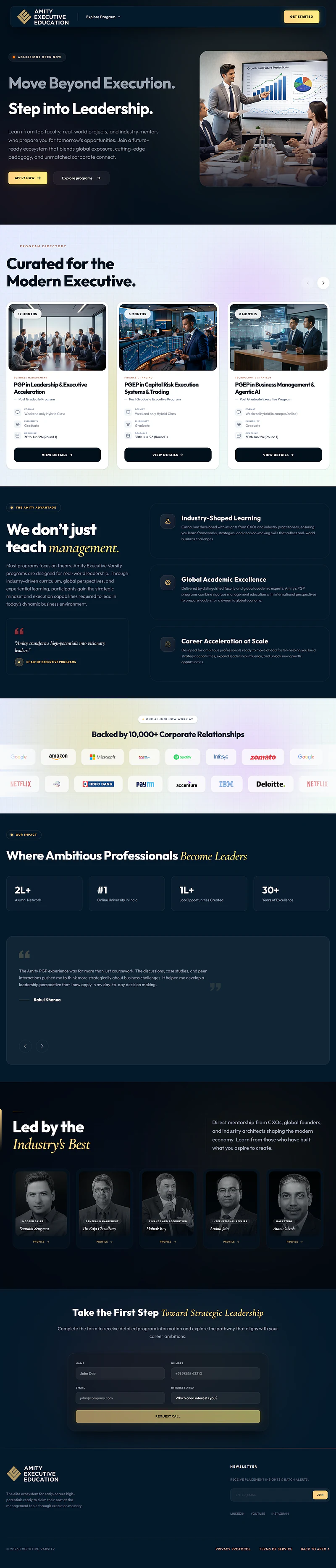
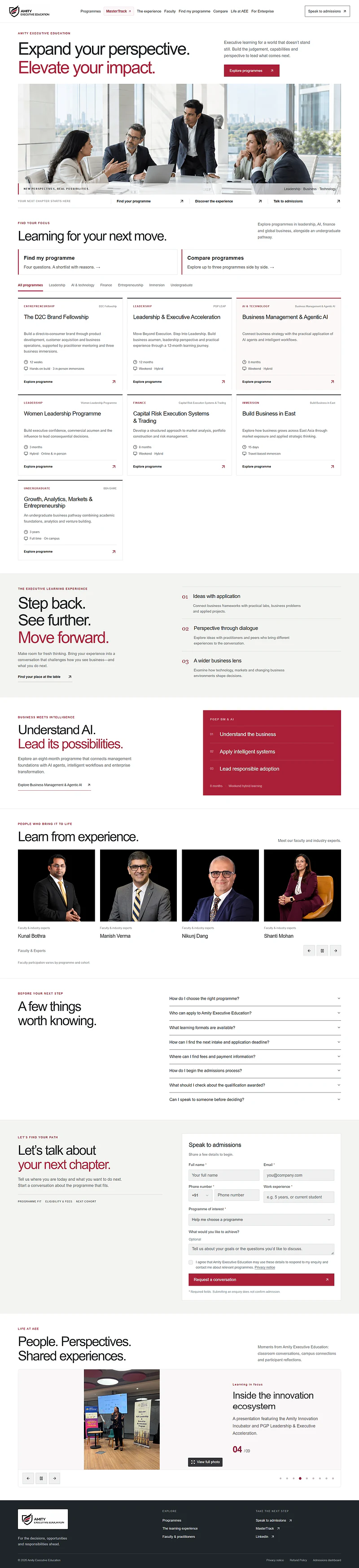
Drag the handle to compare the Drupal homepage with the Next.js rebuild. Press Drive the tour and both pages scroll together, section by section, while the panels show what changed in the technology underneath.
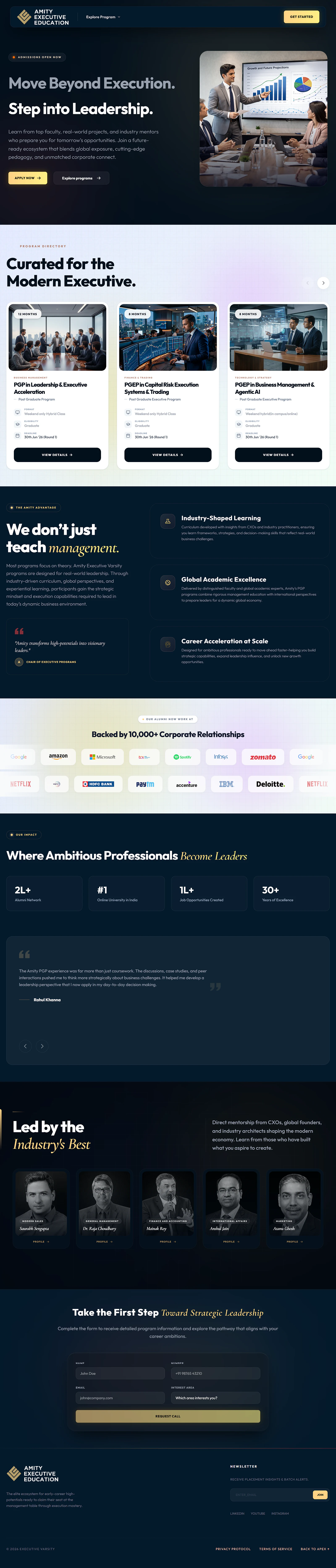
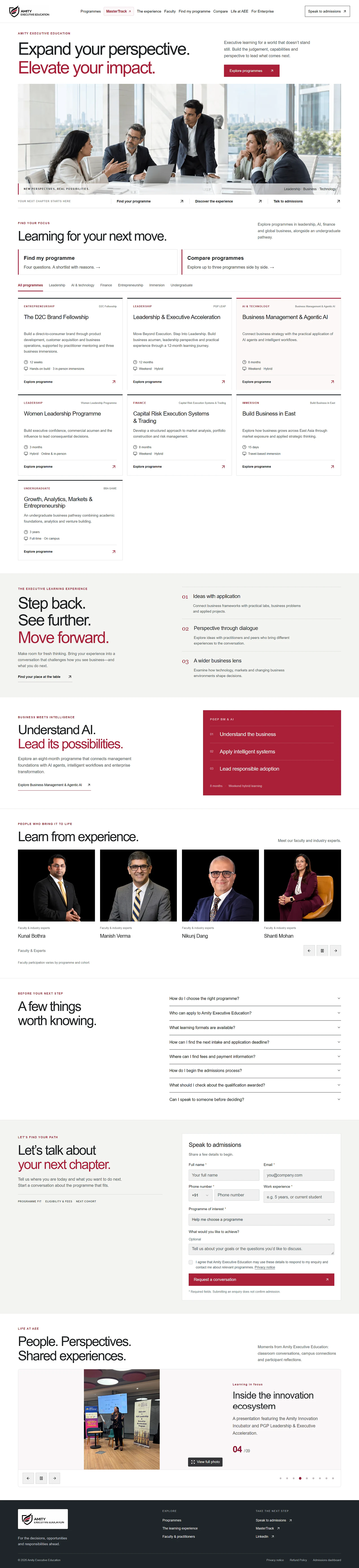
Scroll over the screen to move through both homepages together, drag the handle to compare, or press Drive the tour. Keyboard: focus the handle and use the arrow keys.
More pages, before and after


Scroll inside a screen with your mouse, trackpad or finger. With Sync scroll on, the old and new pages move together. Auto-scroll is off until you switch it on.
What changed in the technology, read as a diff
Visitors see the redesign. Underneath, the stack moved from one Drupal system to a headless setup: a Next.js front end, Strapi for content, and APIs to the CRM and the payment gateway. Here is every change, with a note on why it matters to the people who run the site.
48 hours, one focused team
The client had a firm launch date. Filari's full team worked on the project in parallel, with design, front end, CMS and integrations moving at the same time instead of one after another. Speed did not mean skipping steps: every page was reviewed and tested before launch.
Brief and audit
Client layout reviewed. Drupal site audited for programmes, faculty, pages and forms to carry over.
Design system
Layout styled into a full design: type, colour, programme cards, tables and forms.
Redesign ready
Every key page designed and approved within the first day.
Next.js + Strapi
Pages built in Next.js, content types set up in Strapi, content migrated from Drupal.
Leads and payments
Enquiry form wired to the CRM, payment gateway integrated, admissions dashboard connected.
Tested and live
Forms, payments, mobile layouts and SEO checked. Site live within 48 hours.
Four questions. A shortlist with reasons.
"Find my programme" asks about the visitor's goal, experience, preferred format and focus area. It returns a short list of programmes, each with the reason it fits, and links to compare them or talk to admissions.
Alongside it, "Compare programmes" puts up to three options side by side: duration, format, immersions and outcomes.
What do you want to achieve?
Illustration · not a live screen
The whole bundle, end to end
Programme catalogue with filters
Leadership, AI, finance, entrepreneurship, immersion, undergraduateSeven programmes, from a 15-day East Asia immersion to a 3-year BBA, each card showing duration and format so visitors can scan in seconds.
Programme finder
Four questions to a reasoned shortlistA guided flow that replaces browsing with a short list, each result explaining why it fits.
Compare programmes
Up to three, side by sideDuration, format, immersions and outcomes in one view, so the decision is made on the site, not in a spreadsheet.
Enquiry form and leads integration
Every enquiry reaches admissionsName, email, phone, work experience, programme of interest and goals, with explicit consent. Each enquiry is sent to the CRM through an API for follow-up.
Payment gateway integration
Fees paid onlineApplicants pay online through an integrated gateway, with payment status tied to the application and a published refund policy.
Admissions dashboard
One view for the admissions teamStaff see enquiries, applications and payments in one admin area and move each applicant to the next step.
Strapi CMS for programmes, faculty and events
No developer for content changesProgrammes, 30+ faculty profiles, the Life at AEE gallery and FAQs are all managed in Strapi and published straight to the site.
Enterprise, MasterTrack and SEO
One brand, several doorsA For Enterprise page for company buyers, a MasterTrack subdomain, clean programme URLs and analytics through Google Tag Manager.
Next.js in front, Strapi behind, integrations around it
The front end is a Next.js application. Content comes from a self-hosted Strapi CMS and images are optimised through Next.js. Leads go to the CRM by API, payments run through an integrated gateway, and the admissions dashboard ties them together.
Why Next.js
Search-friendly pages that load fast, with automatic image optimisation for a photo-heavy site.
Why Strapi
Structured content types for programmes, faculty and events, so the team edits content without touching code.
Consent-first lead capture
Every form records consent before an enquiry is sent to the CRM by API.
Payments tied to applications
Gateway callbacks update the application, so admissions always sees who has paid.
One brand, several properties
Main site, MasterTrack subdomain and enterprise page share one design system and CMS.
Measured from day one
Google Tag Manager tracks enquiries, finder completions and programme views.
Two decisions and two hard problems
A rebuild on Next.js and Strapi
Restyling the existing Drupal site
Programme updates on Drupal needed a developer. Structured content in Strapi lets the Amity team publish programmes, faculty and events themselves, and Next.js serves fast, search-friendly pages.
Design, build, content and integrations in parallel
Finishing design before starting the build
The launch date was fixed. Running the streams together had the redesign approved on day one and the full platform live on day two, with every page reviewed before launch.
Programmes, 30+ faculty profiles, pages and forms all lived in Drupal.
The Drupal site was audited on day one, and every item was mapped to a Strapi content type before it was migrated.
Nothing was left behind in the move, and every programme follows the same structure.
Admissions needed to know who had enquired, applied and paid, across separate systems.
Enquiries go to the CRM by API with consent, and gateway callbacks update each application. The admissions dashboard shows both.
The team works from one view and follows up the right applicants first.
A 48-hour migration is possible when the content is mapped before the build starts. Most of the risk in a Drupal to Next.js move sits in the content and the forms, not the design. Auditing those first let design and build run side by side without rework.
How to build an executive education website
If you run executive programmes, a business school or a university continuing-education unit, these are the parts that mattered most on this project, and what we would recommend for yours.
Start from how executives decide
Busy professionals want a fit, not a catalogue. Put a short programme finder and a comparison tool near the top of the site.
Model programmes as structured content
Duration, format, eligibility, fees, immersions and curriculum should be fields in a headless CMS such as Strapi, so every programme page and comparison stays consistent.
Use a fast, search-friendly front end
A Next.js website renders pages ready for Google and optimises images automatically, which matters on photo-heavy education sites.
Make every page lead to admissions
One clear enquiry form with consent, sent to the CRM by API, so no lead waits in an inbox.
Take payments online
Integrate a payment gateway and link each payment to the application, with a published refund policy.
Plan the migration, not just the design
Moving from Drupal to Next.js is mostly a content job: map every programme, faculty profile and URL before you build, and keep redirects in place.
Questions about executive education websites
It depends on the size of the site. For Amity Executive Education, Filari redesigned the site within a day and had the full Next.js and Strapi platform live within 48 hours, because the whole team worked in parallel on design, build, content and integrations.
Start with a programme finder and comparison tool, model programmes as structured content in a headless CMS, build a fast Next.js front end, send every enquiry to your CRM and take fees online through a payment gateway.
It should help a working professional find the right programme quickly, compare options and speak to admissions. Amity Executive Education's site has a four-question programme finder, a side-by-side compare tool for up to three programmes, and an enquiry form that sends leads straight to the admissions team.
Next.js serves fast, search-friendly pages and optimises images automatically. Paired with Strapi as a headless CMS, the Amity Executive Education team can publish programmes, faculty and events without a developer, while the front end stays fast.
The visitor answers four short questions about their goals and situation. The site returns a shortlist of programmes with the reasons each one fits, and links to compare them or talk to admissions.
Yes. Filari integrated a payment gateway so applicants can pay online, with payment status recorded against their application and visible to the admissions team.
Rebranding, or outgrowing your current site?
Tell us what you offer and who you sell to. We will plan the rebuild with you.
More projects like this one
 Education
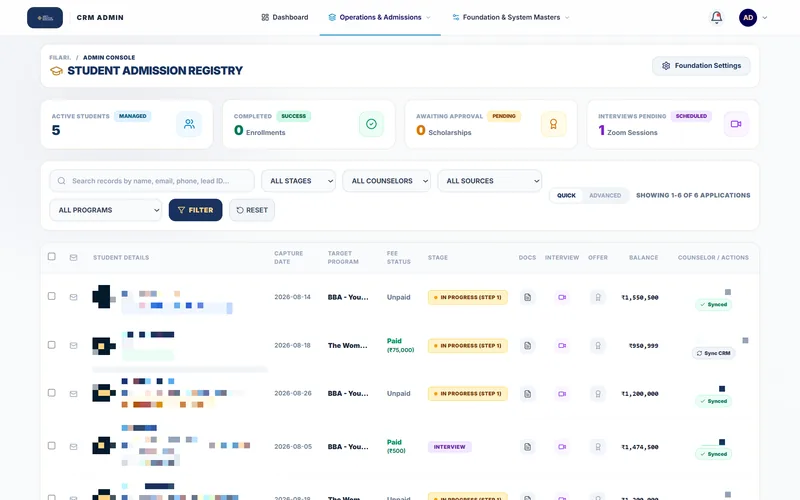
Admission Management Platform for Executive Education
One platform for every admission: no-code application forms, interviews, scholarships, offer letters, online fees and LeadSquared sync.
 Education
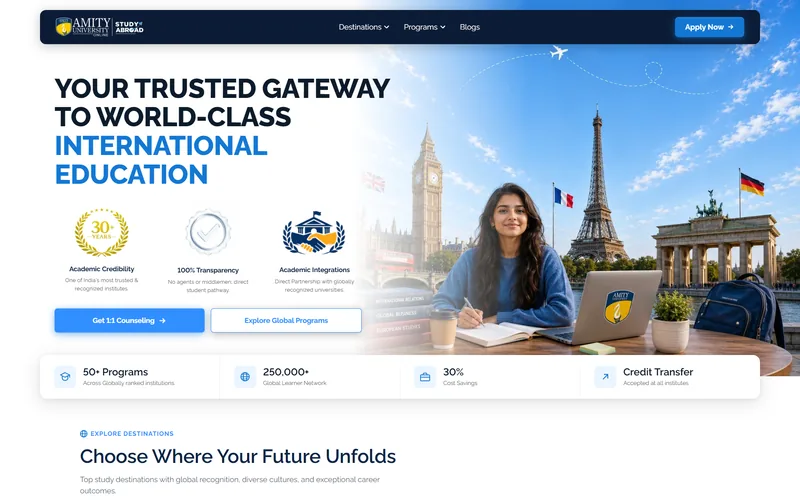
Study Abroad Pathway Website: 5 Countries
Destination, university and programme pages from one headless CMS, counselling capture and an SEO blog.
 Education
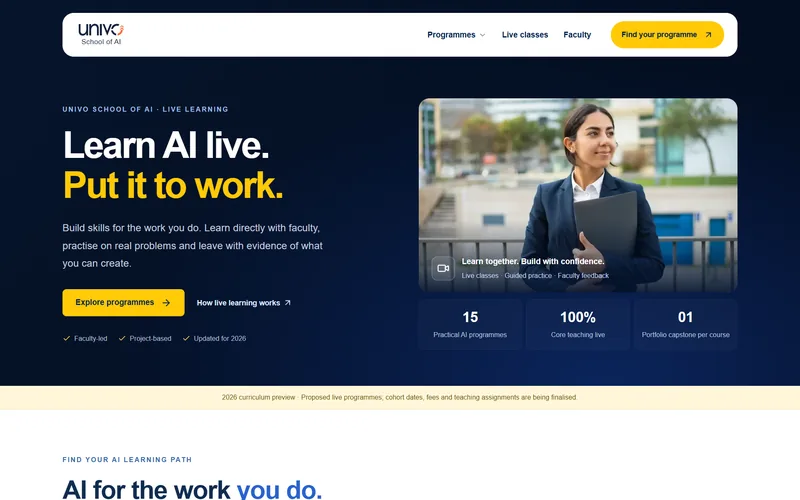
Next.js + Strapi Rebuild for an AI School
Course content moved out of the code into a CMS the team runs, rebuilt on Next.js 16, Strapi 5, MySQL 8 and S3 without touching the live site.